
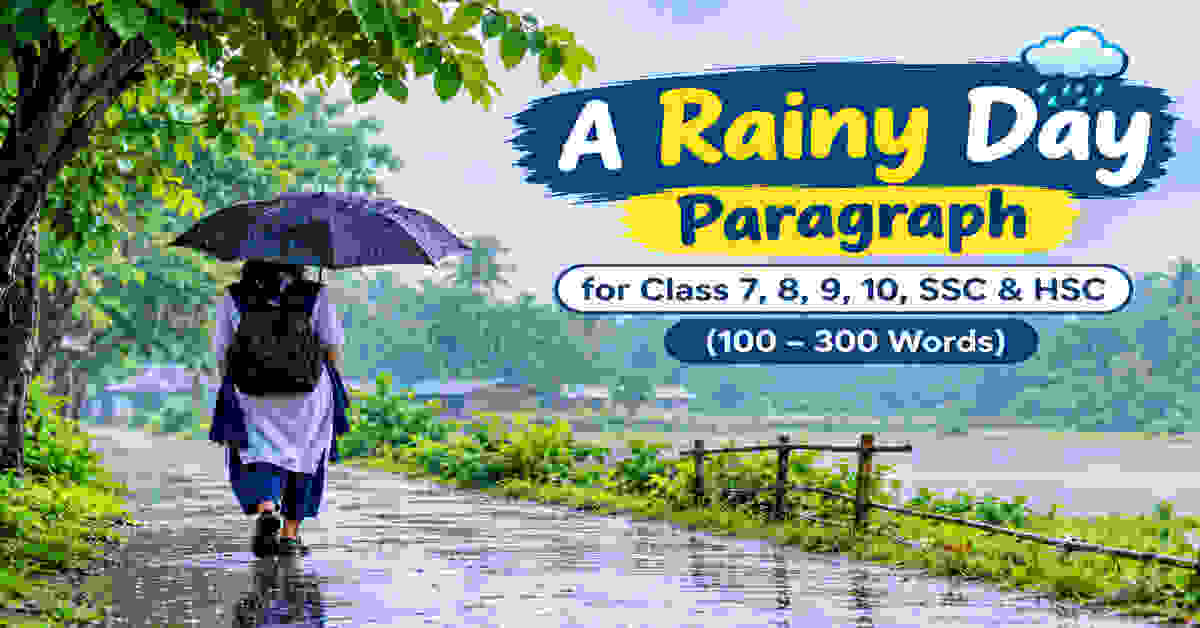
A Rainy Day Paragraph: Complete Guide for All Classes (SSC & HSC)This comprehensive guide provides paragraphs on “A Rainy Day” in different word counts (100, 150, 200, 250, and 300 words), specifically tailored for students of classes 7, 8, 9, 10, SSC, and HSC.
Read More: A Winter Morning Paragraph 100, 150, 200, 250, 300 Words
1. A Rainy Day Paragraph (100 Words) – For Class 7 & 8
A Rainy Day is a day when it rains continuously from morning to evening. The sky remains overcast with dark clouds, and the sun is hardly seen. Roads become muddy, waterlogged, and slippery. Due to heavy downpours, pedestrian movement decreases significantly, and schools often declare a holiday. People prefer to stay indoors, enjoying warm snacks like hot tea and khichuri. Children feel thrilled as they get a chance to play indoors or watch paper boats float on rainwater. Although it causes temporary disruption to daily life, a rainy day brings immense relief from scorching summer heat and refreshes nature.
Read More: Dowry System Paragraph for Class 6, 7, 8, 10, SSC & HSC (100, 150, 200 Words)
2. A Rainy Day Paragraph (150 Words) – For Class 8 & 9
A Rainy Day is a blessing in disguise that brings immense charm and relief, especially during the scorching summer months. On such a day, dark clouds cover the sky, blocking out the sun completely. Continuous or intermittent showers transform the surroundings. Roads and low-lying areas often get waterlogged, causing immense hardship for office-goers and day laborers who struggle to commute. For students, however, it is usually a welcome break. Schools are often closed or attendance drops sharply. Inside homes, families gather around to enjoy traditional delicacies like pitha or hot tea while listening to the soothing sound of raindrops pattering on rooftops. Nature takes on a fresh, vibrant green look as dust is washed away from leaves and grass. Despite the muddy roads and traffic snarls, a rainy day leaves a lasting, peaceful impression on everyone’s mind.
Read more: Greenhouse Effect Paragraph for Class 6, 7, 8, 9, 10, SSC & HSC
3. A Rainy Day Paragraph (200 Words) – For Class 9, 10 & SSC
A Rainy Day is a day characterized by incessant rainfall, gloomy skies, and a cool, refreshing atmosphere that alters the rhythm of normal life. It usually occurs during the monsoon season in tropical countries like Bangladesh. The day begins with dark, heavy clouds rolling across the sky, completely obscuring the sun. Soon, a steady downpour begins, transforming dusty streets into muddy pathways and flooding low-lying areas. The impact of a rainy day varies greatly depending on who you ask. For daily wage earners, rickshaw-pullers, and commuters, it is a period of hardship and financial struggle due to disrupted work and waterlogged streets. Conversely, for children and students, it brings immense joy. Schools are either suspended or transformed into quiet, cozy spaces where learning takes a back seat to the melody of the rain. People love to stay indoors, wrapped in warm blankets, reading books, or relishing traditional rainy-day foods like hot khichuri with eggs or beef. Ultimately, a rainy day breathes new life into nature. Trees and plants look greener, rivers swell with fresh water, and the air becomes clean and pollution-free. It provides a much-needed pause from our hectic, fast-paced lives, reminding us of the raw, beautiful power of nature.
Read More: 50 important Paragraph List
4. A Rainy Day Paragraph (250 Words) – For SSC & HSC Candidates
A Rainy Day is a unique climatic phenomenon that disrupts routine human activities while deeply rejuvenating the natural world. It is typically experienced during the monsoon months when moisture-laden winds bring continuous rainfall. The morning of a rainy day usually breaks with a gloomy, overcast sky. The sun remains hidden behind thick, dark grey clouds, casting a dim light over the earth. Soon, raindrops start falling, ranging from a gentle drizzle to a torrential downpour accompanied by distant rumbling thunder. The psychological and practical effects of this day are diverse. On the economic front, daily wage earners, street vendors, and outdoor workers suffer immensely as their earnings plummet due to paralyzed transportation and waterlogged roads. Public transport becomes scarce, and traffic congestion turns commuting into a nightmare. However, looking at the brighter side, a rainy day is a source of pure delight for students and nature lovers. Educational institutions often experience low attendance or closures, giving students unexpected leisure time. Children love to sail paper boats in accumulated street water or watch the rain from their balconies. Indoors, families experience a cozy atmosphere. The aroma of boiling tea and freshly cooked khichuri fills the air, blending with the rhythmic drumming of raindrops on window panes. In conclusion, a rainy day washes away the dust and impurities of the environment. Nature wears a freshly washed, vibrant green look. It acts as a poetic reminder of how weather can instantly shift our moods from the monotony of daily life into a state of deep reflection, peace, and appreciation.
Read More: SSC English 2nd Paper Paragraph Suggestion 2027: 100% Common
5. A Rainy Day Paragraph (300 Words) – Advanced Level for HSC
A Rainy Day is an extraordinary meteorological experience that brings a dramatic shift to our daily routine, offering a blend of natural beauty, poetic melancholy, and everyday challenges. In South Asian countries, particularly during the monsoon season, a rainy day arrives as a welcome relief from oppressive summer heat waves, transforming the stifling environment into a cool, wet sanctuary. The day typically commences under a heavy canopy of dark, bruised clouds that block out the morning sun entirely. A persistent, steady downpour begins, casting a grey veil over the landscape. Within hours, unpaved roads turn into muddy quagmires, and poorly drained urban streets become temporary lakes, halting traffic and causing immense suffering for daily commuters, office-goers, and low-income workers whose livelihood depends on outdoor activities. Puddles form everywhere, and umbrellas and raincoats become mandatory gear for anyone forced to step outside. Despite these logistical hardships, a rainy day holds a special place in the human heart, especially for poets, writers, and youth. The ambient sound of relentless rain hitting tin roofs creates a meditative atmosphere. Schools and colleges often turn into quiet havens where lessons blend with the pitter-patter outside. At home, families unite in cozy spaces, enjoying hot refreshments like tea, biscuits, and traditional comfort foods. Children find innocent joy in splashing through puddles or watching colorful paper boats navigate rushing streams of rainwater. Beyond human experiences, nature reaps the ultimate benefits. Flora and fauna revive dramatically. The air becomes crisp and clean, stripped of urban pollution, while trees, grass, and crops gleam with a renewed emerald brilliance. Parched soils drink deeply, recharging underground water tables. Ultimately, a rainy day is much more than bad weather; it is a profound ecological reset and a poetic pause that invites us to slow down, reflect, and admire the refreshing grace of nature.
Read More: Climate Change Paragraph for Class 6, 7, 8, 9, 10, SSC & HSC
Frequently Asked Questions (FAQs)
1. What is a rainy day?
A rainy day is a day characterized by continuous or heavy rainfall from morning to evening, accompanied by a cloudy sky and a cool, pleasant temperature.
2. In which season do we mostly experience rainy days?
We mostly experience rainy days during the monsoon season (rainy season), which typically spans from June to August in South Asian countries like Bangladesh.
3. How does a rainy day affect nature?
A rainy day washes away dust and pollution from trees and plants, making them look lush and green. It also revives parched land and fills up rivers, canals, and ponds.
4. Why do students love a rainy day?
Students love a rainy day because it often brings school holidays, unexpected breaks, or a cozy classroom environment where they can enjoy leisure time and play.
5. What are the common hardships faced on a rainy day?
Waterlogged roads, heavy traffic jams, disrupted transportation, and a lack of daily income for street vendors and daily wage earners are the most common hardships.
6. What do people usually eat on a rainy day in Bangladesh?
In Bangladesh, people traditionally love to eat hot khichuri served with eggs, beef, or Hilsa fish fry, along with steaming cups of tea and home-cooked snacks (pitha).
7. How does a rainy day impact daily wage earners?
Daily wage earners like rickshaw-pullers, construction workers, and day laborers face severe financial difficulties because rain prevents them from working outdoors.
8. Is a rainy day beneficial for agriculture?
Yes, rainy days provide essential natural irrigation for crops, paddy fields, and vegetation, which is vital for agricultural countries.
9. What poetic or emotional feelings are associated with rain?
Rain often evokes feelings of nostalgia, peace, romance, and deep reflection, inspiring poets and artists to compose beautiful verses and songs.
10. How can students write a better paragraph on a rainy day?
Students can write a better paragraph by including a clear introduction, descriptions of nature and human life, the contrast between hardships and joy, and a meaningful conclusion.
a rainy day brings a mixed experience of joy and hardship to our lives. While it causes temporary suffering for daily wage earners and disrupts normal communication, it simultaneously rejuvenates nature, clears the air, and offers a peaceful break from our monotonous daily routine. Ultimately, a rainy day is a wonderful blessing of nature that fills our hearts with freshness, joy, and a deep sense of tranquility.
Read More: Price Hike paragraph
Read More:
১) ২০২৭ সালের এসএসসি ও সমমান পরীক্ষার জন্য সংশোধিত পুনর্বিন্যাসকৃত পাঠ্যসূচি
২) এসএসসি ২০২৭: নতুন সিলেবাস, প্রশ্নপত্রের কাঠামো এবং নম্বর বণ্টন




আসসালামু আলাইকুম ওয়া রাহমাতুল্লাহ। shikkhatech24.com ওয়েবসাইটে আপনাকে স্বাগতম। শিক্ষা, স্বাস্থ্য , প্রযুক্তি, টেক আপডেট, এসএসসি ও এইচএসসি সাজেশন, চাকরির খবর, উদ্যোক্তা, খাবার ব্যবস্থাপনা ইত্যাদি নানা বিষয় সম্পর্কে নিত্যনতুন তথ্য জানতে ওয়েবসাইটটি সাবস্ক্রাইব করুন এবং অন্যদের সাথে শেয়ার করুন।