
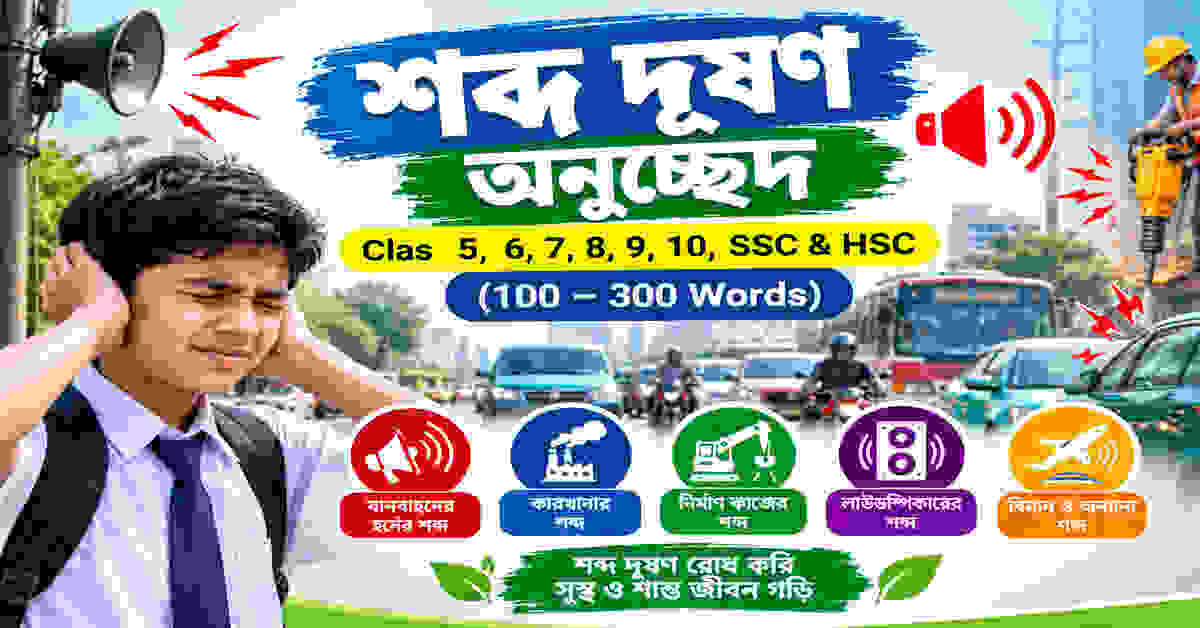
Developing strong paragraph writing skills is essential for students and exam candidates. In school tests and board exams, “Sound Pollution” (also known as Noise Pollution) is one of the most common and important topics. From Class 5 up to SSC and HSC levels, this paragraph frequently appears in English exams. To make learning easier and cater to different word limits (from 100 to 300 words), this article presents simple, well-structured sound pollution paragraphs specifically designed for students of Class 5, 6, 7, 8, 9, 10, SSC, and HSC.
Read More: Environment Pollution Paragraph for Class 6 to HSC | পরিবেশ দূষণ অনুচ্ছেদ
Sound Pollution Paragraph (100 Words)
Sound pollution, or noise pollution, means excessive and unwanted noise in our environment. It is a severe problem in modern times, especially in urban areas. The major sources of sound pollution are hydraulic horns of vehicles, brick breakers, loud speakers, construction work, and factory machinery. Continuous exposure to high sound levels harms human health. It causes headaches, stress, high blood pressure, and even permanent hearing loss. Students cannot concentrate on their studies due to loud noise. To stop sound pollution, we should avoid using loud horns, restrict loud speakers, and plant more trees around roads to absorb noise.
Read More: A Winter Morning Paragraph 100, 150, 200, 250, 300 Words
Sound Pollution Paragraph (150 Words)
Sound pollution is a major environmental hazard that degrades the quality of life in cities and towns. It refers to any harsh, loud, or disturbing sound that irritates the human ear and disturbs peace. The primary causes of sound pollution include unrestricted vehicle horns, heavy traffic, industrial machinery, construction sites, and the indiscriminate use of loudspeakers during festivals or gatherings. Continuous exposure to loud noise leads to severe physical and psychological problems. It causes hearing impairment, chronic headaches, hypertension, sleep disturbance, and emotional stress. Old people, hospital patients, and young students suffer the most from intense noise. To control sound pollution, strict laws against hydraulic horns and public loudspeakers must be enforced. Furthermore, creating silence zones around schools and hospitals, using sound barriers, and spreading public awareness are crucial steps toward securing a peaceful and quiet environment.
Read More: A Rainy Day Paragraph For Six to HSC
Sound Pollution Paragraph for Class 5 & 6
Sound pollution means loud and harsh noise in the environment. It is mainly caused by car horns, factory machines, loudspeakers, and construction work. Loud noise makes people angry and sick. It gives us headaches and disturbs our sleep. Old people and small babies suffer a lot because of noisy surroundings. Students cannot focus on their studies when there is loud noise outside. We must stop using hydraulic horns and avoid playing music on loud speakers. Keeping our environment quiet helps everyone stay healthy and happy.
Read More: Dowry System Paragraph for Class 6, 7, 8, 10, SSC & HSC (100, 150, 200 Words
Sound Pollution Paragraph for Class 7 & 8
Sound pollution is a harmful environmental issue caused by excessive noise. In big cities, sound pollution has become a daily nightmare. The main sources of noise pollution are hydraulic horns from buses and trucks, construction machines, factory engines, and high-volume loudspeakers. Prolonged exposure to loud sound causes serious health hazards such as headaches, hearing problems, high blood pressure, and mental stress. It also destroys the peaceful study environment for students. To prevent sound pollution, driver training should be improved, hydraulic horns must be banned, and silence zones near schools and hospitals must be strictly maintained.
Read More: Climate Change Paragraph for Class 6, 7, 8, 9, 10, SSC & HSC
Sound Pollution Paragraph for Class 9 & SSC (250 Words)
Sound pollution, often referred to as noise pollution, is an alarming environmental problem in modern urban society. It occurs when unwanted, harsh, and excessive sound disrupts the natural tranquility of the environment and poses serious risks to human health and animal life. There are numerous factors contributing to sound pollution. Unregulated vehicular traffic is the chief culprit in cities. Drivers frequently blow unnecessary hydraulic horns. Heavy machinery at construction sites, industrial factories, brick breakers, generators, and low-flying aircraft generate high levels of noise. Furthermore, indiscriminate use of loudspeakers, microphones, and sound systems during political rallies, weddings, and cultural events aggravates the crisis. The consequences of sound pollution are severe for both body and mind. It causes temporary or permanent hearing impairment, cardiac problems, high blood pressure, extreme fatigue, and severe migraines. Mental health issues like anxiety, irritability, depression, and insomnia are closely linked to continuous noise. Students suffer terribly as noisy environments hamper their concentration and academic performance. Moreover, wildlife and animals are distressed by loud human noises. To combat sound pollution, effective measures must be taken by authorities and citizens alike. Governments must enforce strict anti-noise laws, ban hydraulic horns completely, and relocate factories away from residential zones. Setting up silence zones near educational institutions and hospitals is essential. Promoting public awareness about the harmful effects of noise pollution will help build a quieter, healthier world.
Read more: Greenhouse Effect Paragraph for Class 6, 7, 8, 9, 10, SSC & HSC
Sound Pollution Paragraph for HSC (300 Words)
Sound pollution, also known as noise pollution, is an invisible yet dangerous environmental hazard of the modern industrial era. It refers to the propagation of unwanted, excessive, or distressing sound levels that interfere with normal human activity and degrade the ecological balance. Unlike water or air pollution, sound pollution cannot be seen, yet its destructive impact on physical and psychological well-being is immense.The causes of sound pollution are multifaceted and largely urban-centric. Rapid industrialization, unplanned urban growth, and motorization are the primary drivers. On city roads, the reckless honking of vehicles especially high-decibel hydraulic horns creates intolerable noise. Construction sites equipped with heavy excavators, pile drivers, and concrete mixers add to the acoustic pollution. Industrial units, textile mills, power generators, and railway engines continuously release high frequencies of noise. Additionally, public address systems, social gatherings, and loud music systems used without temporal limits worsen noise intensity in residential neighborhoods. The impacts of sound pollution on human health are devastating. Scientifically, continuous exposure to sound levels exceeding 75 to 80 decibels leads to irreversible hearing loss. It triggers cardiovascular complications, high blood pressure, chronic insomnia, and elevated stress hormones. Children, pregnant women, elderly citizens, and hospitalized patients are exceptionally vulnerable to sudden, loud noises. Furthermore, sound pollution impairs cognitive development and focus in students, leading to reduced academic performance. It also interferes with animal navigation, communication, and wildlife behavior. Mitigating sound pollution requires strong regulatory frameworks and civic responsibility. Governments should strictly enforce noise control standards, mandate silence zones around hospitals and schools, and impose heavy fines on vehicles using illegal horns. Industrial zones and highways should feature acoustic barriers and dense tree belts to absorb sound waves. Spreading public education about noise hazards is essential to foster a quieter and healthier society.
Read More: Price Hike paragraph
Frequently Asked Questions (FAQ)
1. What is sound pollution?
Sound pollution is the presence of unwanted, harsh, and excessive sound in the atmosphere that disturbs human comfort, health, and environmental peace.
2. What are the main causes of sound pollution?
The main causes include hydraulic vehicle horns, industrial machinery, construction tools, power generators, and high-volume loudspeakers used in public events.
3. What health problems are caused by sound pollution?
Sound pollution causes hearing loss, high blood pressure, heart disease, chronic headaches, stress, anxiety, and sleep disorders.
4. What is a hydraulic horn and why is it harmful?
A hydraulic horn is a high-decibel sound device used in heavy vehicles. It produces extremely loud sound levels that can instantly damage human hearing.
5. Why is the Sound Pollution Paragraph important for exams?
Sound pollution is a top-tier environmental topic frequently included in English writing exams for school tests, SSC, and HSC board examinations.
6. What is the standard word limit for a Sound Pollution Paragraph in Class 5 and 6?
For Class 5 and Class 6 students, a concise paragraph between 80 to 100 words written in clear, simple language is recommended.
7. How long should a Sound Pollution Paragraph be for SSC candidates?
SSC candidates should write a detailed paragraph of around 200 to 250 words covering sources, health hazards, student impacts, and solutions.
Read More: SSC English 2nd Paper Paragraph Suggestion 2027: 100% Common
8. What is the ideal word count for an HSC Sound Pollution Paragraph?
For HSC candidates, a comprehensive paragraph of 250 to 300 words with advanced vocabulary, decibel insights, and policy-level solutions is required.
9. What are silence zones?
Silence zones are areas designated around hospitals, schools, colleges, and courts where vehicle honking and loud noises are strictly prohibited by law.
10. How can we reduce sound pollution in daily life?
We can reduce sound pollution by avoiding unnecessary honking, keeping music and TV volumes low, planting tree barriers along roads, and enforcing noise control laws.
Read More: 50 important Paragraph List
In conclusion, sound pollution is a silent threat that jeopardizes public health and environmental peace. Although it often receives less attention than air or water pollution, its adverse effects on human hearing, mental stability, and student learning are profound. Addressing sound pollution requires a combination of strict government laws, civic consciousness, and environmental planning. By eliminating hydraulic horns, maintaining silence zones, and fostering respect for peaceful surroundings, we can build a quieter, safer, and healthier living environment for present and future generations.
Read More:
১) ২০২৭ সালের এসএসসি ও সমমান পরীক্ষার জন্য সংশোধিত পুনর্বিন্যাসকৃত পাঠ্যসূচি
২) এসএসসি ২০২৭: নতুন সিলেবাস, প্রশ্নপত্রের কাঠামো এবং নম্বর বণ্টন




আসসালামু আলাইকুম ওয়া রাহমাতুল্লাহ। shikkhatech24.com ওয়েবসাইটে আপনাকে স্বাগতম। শিক্ষা, স্বাস্থ্য , প্রযুক্তি, টেক আপডেট, এসএসসি ও এইচএসসি সাজেশন, চাকরির খবর, উদ্যোক্তা, খাবার ব্যবস্থাপনা ইত্যাদি নানা বিষয় সম্পর্কে নিত্যনতুন তথ্য জানতে ওয়েবসাইটটি সাবস্ক্রাইব করুন এবং অন্যদের সাথে শেয়ার করুন।