
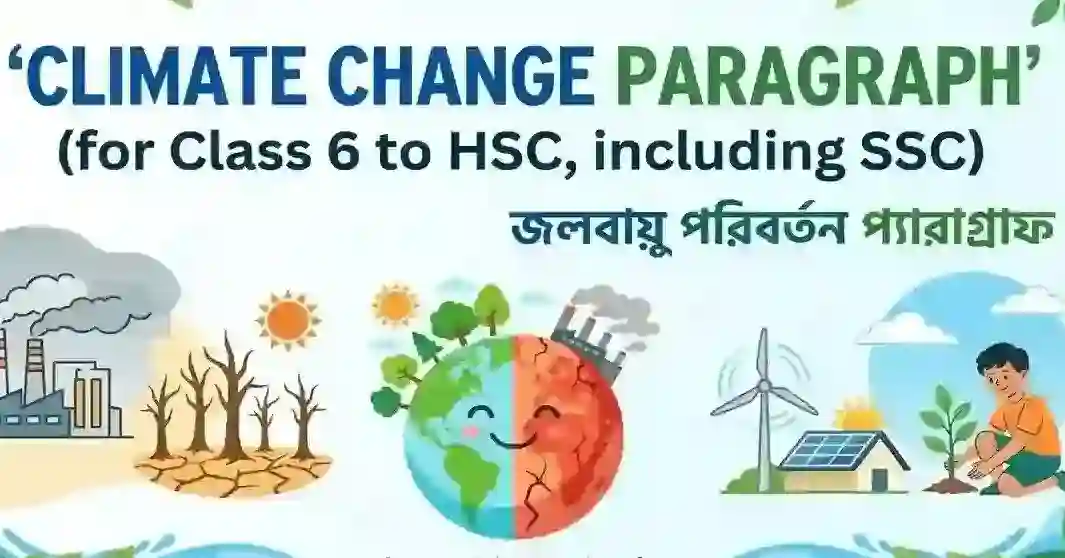
Climate Change is currently one of the most critical topics for school and college examinations in Bangladesh, as well as a major global issue. Questions and paragraph writing on climate change frequently appear in Class 6 to HSC board exams. To help students prepare effectively, we have provided structured and easy-to-understand paragraphs on Climate Change categorized by class levels and word limits.
Read More: Tarffic jam Paragraph
1. Climate Change Paragraph for Class 6 & 7 (100 Words)
Climate change means long-term changes in global temperatures and weather patterns. Today, our Earth is becoming warmer every day. Human activities like cutting down trees, burning fossil fuels, and running factories produce harmful gases. These gases trap heat in the atmosphere and cause climate change. Because of climate change, the weather is changing unexpectedly. Summers are getting hotter, and winters are becoming shorter. Rivers are drying up, while floods and storms are happening more often. To stop climate change, we must plant more trees, keep our surroundings clean, and use less plastic and electricity.
সহজ বাংলা অনুবাদ: জলবায়ু পরিবর্তন বলতে পৃথিবীর তাপমাত্রা এবং আবহাওয়ার দীর্ঘমেয়াদী পরিবর্তনকে বোঝায়। মানুষের বিভিন্ন কাজ যেমন গাছপালা কাটা, জ্বালানি পোড়ানো এবং কলকারখানার ধোঁয়া পরিবেশকে উত্তপ্ত করছে। এর ফলে গ্রীষ্মকাল অতিরিক্ত গরম হচ্ছে এবং বন্যা বা ঝড়ের মতো প্রাকৃতিক দুর্যোগ বাড়ছে। পরিবেশ রক্ষায় আমাদের প্রচুর গাছ লাগানো উচিত।
Read More: Price Hike paragraph
2. Climate Change Paragraph for Class 8 (150 Words)
Climate change refers to significant and lasting changes in the Earth’s climate and weather patterns. The main cause of modern climate change is human activity. The burning of fossil fuels such as coal, oil, and gas releases greenhouse gases into the air, trapping heat and causing global warming. Rapid deforestation also makes the situation worse because trees absorb carbon dioxide. The harmful effects of climate change are visible everywhere. Glaciers are melting, sea levels are rising, and extreme weather events like cyclones, droughts, and heavy rains are becoming more frequent. Bangladesh is one of the most affected countries due to its low-lying geographical position. To combat climate change, we must take immediate steps. Planting trees on a large scale, reducing plastic waste, and using renewable energy sources like solar power can help protect our environment for the future.
3. Climate Change Paragraph for Class 9 & 10 (200 Words)
Climate change is one of the most pressing global environmental issues today. It refers to the long-term shift in global or regional climate patterns, mainly driven by human activities since the industrial era. The primary driver of climate change is global warming, which occurs when greenhouse gases like carbon dioxide and methane trap solar heat in the Earth’s atmosphere. Uncontrolled industrial growth, massive deforestation, burning of fossil fuels, and rapid urbanization are accelerating this problem. As a result, global temperatures are rising rapidly, causing polar ice caps to melt and sea levels to rise. Extreme weather phenomena, such as intense heatwaves, prolonged droughts, destructive cyclones, and irregular rainfall, have become common. For Bangladesh, climate change poses a serious threat. Being a low-lying nation, many coastal areas face the danger of going underwater due to sea-level rise. Soil salinity is also ruining agricultural land. To mitigate climate change, global carbon emissions must be reduced. On an individual level, we should promote afforestation, save energy, and raise public awareness.
Read More: Load Shedding Paragraph 100, 150, 200, 250, 300 Words | Class 6-10, SSC, HSC
4. Climate Change Paragraph for SSC Exam (250 Words)
Climate change is a severe environmental threat that affects every living organism on Earth. It refers to long-term variations in temperature, precipitation, and wind patterns caused primarily by human activities. The excessive burning of fossil fuels, expansion of industries, destruction of forests, and overuse of natural resources release massive amounts of carbon dioxide, methane, and other greenhouse gases into the atmosphere. These gases create a blanket around the Earth, trapping heat and raising global temperatures a phenomenon known as global warming. The consequences of climate change are devastating. Melting ice sheets in Greenland and Antarctica are causing sea levels to rise at an alarming rate. Weather patterns have become unpredictable, leading to frequent natural disasters like floods, droughts, severe cyclones, and heatwaves. Developing nations like Bangladesh are the worst victims of climate change, despite contributing very little to global pollution. Rising sea levels threaten to submerge coastal districts, forcing millions of people to become climate refugees. Saline water intrusion is harming agriculture and drinking water supplies in coastal regions. Addressing climate change requires urgent global and local action. Industrialized nations must significantly reduce their carbon emissions and support vulnerable countries. We must transition from fossil fuels to clean, renewable energy sources such as solar and wind power. Additionally, nationwide tree plantation drives, sustainable waste management, and strict environmental policies are essential to safeguard our planet.
আরও পড়ুনঃ এসএসসি বাংলা ২য় পত্র সাজেশন ২০২৭
5. Climate Change Paragraph for HSC Exam (300 Words)
Climate change represents an existential threat to humanity and the global ecosystem. It refers to the significant, long-term alteration of global temperature, precipitation, and atmospheric dynamics. While natural factors such as volcanic eruptions and solar variations historically influenced the climate, modern climate change is overwhelmingly driven by human activities post-Industrial Revolution. The primary culprit is the concentration of greenhouse gases such as carbon dioxide, methane , nitrous oxide , and chlorofluorocarbons (CFCs) in the Earth’s atmosphere. Industrial expansion, deforestation, commercial agriculture, and reliance on fossil fuels continuously pollute the air. As these gases retain thermal radiation, the Earth’s global average temperature steadily rises, disturbing ecological stability worldwide. The impacts of climate change are widespread and disastrous. Biodiversity loss, desertification, melting polar ice caps, oceanic acidification, and rising sea levels are destroying habitats. Extreme weather conditions have become regular occurrences, threatening food security and human safety globally. Coastal and riverine nations like Bangladesh face catastrophic risks, including loss of arable land, freshwater contamination due to salinity intrusion, and large-scale climate displacement. Solving the climate crisis demands international unity, policy enforcement, and collective responsibility. Developed countries must uphold climate agreements and fund adaptation efforts in vulnerable nations. Globally, we must transition to sustainable energy systems, enforce strict carbon taxes, stop deforestation, and implement large-scale afforestation programs. Educating the young generation and adopting eco-friendly habits are equally vital to ensure a sustainable future for our planet.
আরও পড়ুন: এসএসসি বাংলাদেশ ও বিশ্বপরিচয় ২য় অধ্যায় MCQ ও সৃজনশীল সাজেশন ২০২৭
10 Frequently Asked Questions (FAQ) on Climate Change
1. What is climate change?
Answer: Climate change refers to long-term shifts in global temperatures and weather patterns, mainly caused by human activities like burning fossil fuels and deforestation.
2. What are the main causes of climate change?
Answer: The primary causes include the burning of fossil fuels (coal, oil, gas), industrial pollution, rapid deforestation, agricultural emissions, and the excessive use of greenhouse gases.
3. What is the difference between global warming and climate change?
Answer: Global warming is the long-term heating of Earth’s surface due to human activities, whereas climate change includes both global warming and its side effects, such as melting glaciers, heavy rainstorms, or frequent droughts.
4. What are the major greenhouse gases causing climate change?
Answer: The main greenhouse gases are Carbon Dioxide, Methane , Nitrous Oxide , Chlorofluorocarbons (CFCs), and Water Vapor.
5. Why is Bangladesh so vulnerable to climate change?
Answer: Bangladesh is a low-lying deltaic country with a vast coastline. Rising sea levels, frequent cyclones, riverbank erosion, and floods make it exceptionally vulnerable to climate impacts.
6. How does climate change affect agriculture and food security?
Answer: Climate change alters rainfall patterns, causes unpredictable weather, increases floods and droughts, and causes soil salinity in coastal areas, severely harming crop yield and food supply.
7. What are the key effects of climate change on the environment?
Answer: The main effects include rising sea levels, melting polar ice caps, loss of biodiversity, severe heatwaves, extreme weather events, and destruction of natural habitats.
8. What is afforestation and how does it help combat climate change?
Answer: Afforestation is the process of planting trees on land that has not been forested recently. Trees absorb carbon dioxide, from the atmosphere, helping reduce the greenhouse effect and cool the planet.
9. How can renewable energy reduce climate change?
Answer: Renewable energy sources like solar, wind, and hydro power do not release greenhouse gases or air pollutants during operation, making them a clean alternative to fossil fuels.
10. How can students contribute to stopping climate change?
Answer: Students can contribute by planting trees, saving energy and water, reducing plastic usage, participating in awareness campaigns, and adopting eco-friendly lifestyle habits.
Climate change is no longer a future prediction; it is a reality that demands immediate attention. While students learn about climate change for academic success, understanding its real-world consequences is far more important. Bangladesh, as a climate-vulnerable country, needs active participation from youth, citizens, and policymakers to build resilience. By planting trees, conserving resources, adopting renewable energy, and spreading environmental awareness, we can protect our natural heritage and guarantee a safe, green world for generations to come.
Read More:
১) ২০২৭ সালের এসএসসি ও সমমান পরীক্ষার জন্য সংশোধিত পুনর্বিন্যাসকৃত পাঠ্যসূচি
২) এসএসসি ২০২৭: নতুন সিলেবাস, প্রশ্নপত্রের কাঠামো এবং নম্বর বণ্টন

আসসালামু আলাইকুম ওয়া রাহমাতুল্লাহ। shikkhatech24.com ওয়েবসাইটে আপনাকে স্বাগতম। শিক্ষা, স্বাস্থ্য , প্রযুক্তি, টেক আপডেট, এসএসসি ও এইচএসসি সাজেশন, চাকরির খবর, উদ্যোক্তা, খাবার ব্যবস্থাপনা ইত্যাদি নানা বিষয় সম্পর্কে নিত্যনতুন তথ্য জানতে ওয়েবসাইটটি সাবস্ক্রাইব করুন এবং অন্যদের সাথে শেয়ার করুন।