
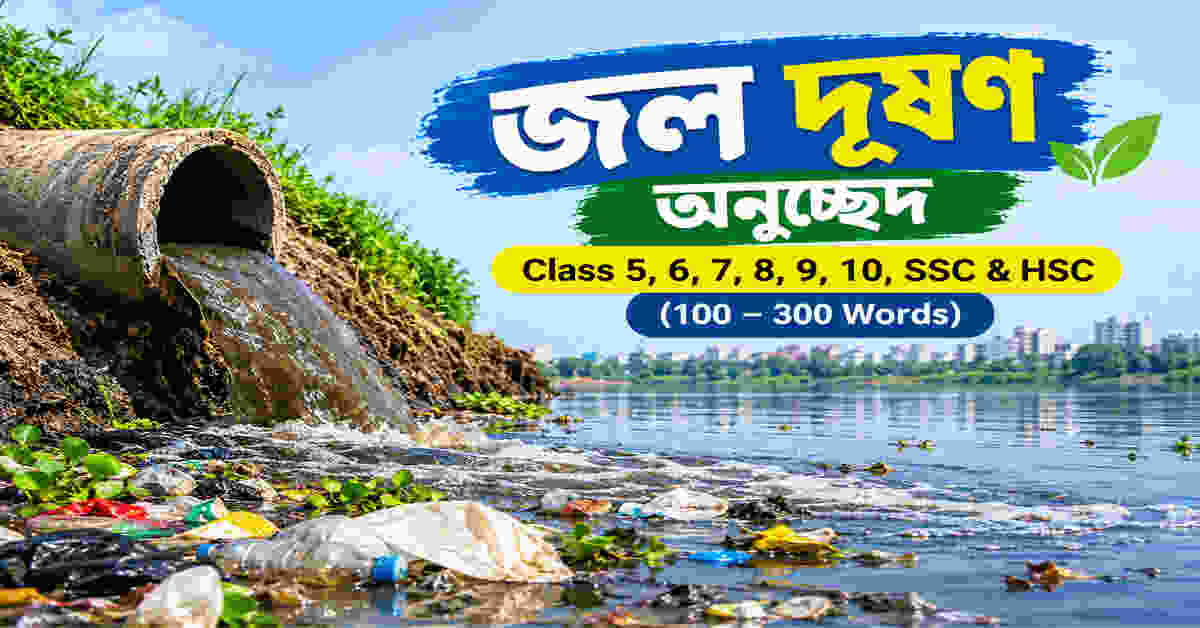
Developing strong paragraph writing skills is essential for students and exam candidates. In school tests and board exams, “Water Pollution” is one of the most common and important topics. From Class 5 up to SSC and HSC levels, this paragraph frequently appears in English exams. To make learning easier and cater to different word limits (from 100 to 300 words), this article presents simple, well-structured water pollution paragraphs specifically designed for students of Class 5, 6, 7, 8, 9, 10, SSC, and HSC.
Read More: Environment Pollution Paragraph for Class 6 to HSC | পরিবেশ দূষণ অনুচ্ছেদ
Water Pollution Paragraph (100 Words)
Water pollution is a major environmental problem today. It happens when harmful substances like chemicals, garbage, and sewage mix with water bodies like rivers, lakes, and oceans. Factory waste, domestic trash, and agricultural pesticides are the main causes of water pollution. Drinking polluted water causes serious health issues like cholera, diarrhea, and typhoid. It also destroys aquatic life, killing fish and water plants. Water is essential for all living beings, so we must stop polluting it. Planting trees, throwing waste properly, and keeping water sources clean are important steps to save our water and environment.
Read More: A Winter Morning Paragraph 100, 150, 200, 250, 300 Words
Water Pollution Paragraph (150 Words)
Water pollution is one of the most alarming environmental threats in the world. It refers to the contamination of water bodies, including rivers, lakes, seas, and underground water sources. When poisonous chemicals, plastic waste, untreated sewage, and industrial effluents enter water, it becomes toxic and unsafe for use. The primary sources of water pollution include rapid industrialization, household waste disposal, and chemical fertilizers used in farming. Drinking or using contaminated water leads to deadly diseases such as cholera, dysentery, jaundice, and typhoid. Furthermore, polluted water degrades marine ecosystems, killing fish and aquatic flora. To tackle this crisis, immediate action is required. Factory owners must treat toxic waste before discharging it into rivers. People should avoid throwing garbage into water bodies. Governments and individuals must work together to protect our water resources and ensure clean, safe water for the future.
Read More: A Rainy Day Paragraph For Six to HSC
Water Pollution Paragraph for Class 5 & 6
Water pollution means making water dirty and unsafe to use. Smoke, chemicals, plastic bags, and household waste pollute rivers, ponds, and lakes. When we throw trash into water, it becomes poisonous. Drinking dirty water makes people sick with stomach diseases like diarrhea and cholera. Fish and aquatic animals also die because of dirty water. Water is life, and we cannot live without it. We must stop throwing rubbish into water bodies and keep our surroundings clean.
Read More: Dowry System Paragraph for Class 6, 7, 8, 10, SSC & HSC (100, 150, 200 Words
Water Pollution Paragraph for Class 7 & 8
Water pollution is a severe environmental problem that affects human health and nature. It occurs when toxic liquids, plastic waste, and chemical fertilizers mix with fresh water sources. Industrial waste from mills and factories, open latrines near water bodies, and dumping household trash into rivers are the main causes. Using contaminated water causes dangerous water-borne diseases like jaundice, typhoid, and dysentery. It also harms fish and damages marine ecosystems. To prevent water pollution, we should stop dumping waste into rivers, treat industrial waste properly, and create public awareness about keeping water clean.
Read More: Climate Change Paragraph for Class 6, 7, 8, 9, 10, SSC & HSC
Water Pollution Paragraph for Class 9 & SSC (250 Words)
Water pollution is a critical environmental hazard facing our world today. It refers to the contamination of water bodies such as rivers, lakes, oceans, and groundwater by harmful chemicals, biological waste, and toxic pollutants. Clean water is vital for human survival, agriculture, and industry, but human activities are continuously degrading its quality. The major causes of water pollution stem from rapid urbanization and industrial growth. Mills and industrial plants discharge toxic chemical waste and heavy metals directly into nearby rivers without treatment. Agricultural runoff containing chemical fertilizers and pesticides also washes into water bodies during rain. In addition, untreated urban sewage, plastic refuse, and oil spills from ships severely pollute water sources. The consequences of water pollution are devastating. Consumption of contaminated water causes severe water-borne diseases, including cholera, diarrhea, dysentery, and typhoid. It affects millions of people, especially children, every year. Environmentally, water pollution disrupts aquatic life by reducing oxygen levels in water, leading to the death of fish and underwater plants. To mitigate water pollution, strict environmental regulations must be enforced. Factories must install Effluent Treatment Plants (ETP) to purify toxic waste before releasing it. Public awareness must be raised to discourage dumping garbage into rivers and lakes. Protecting our water resources is essential to ensure a healthy environment for future generations.
Read more: Greenhouse Effect Paragraph for Class 6, 7, 8, 9, 10, SSC & HSC
Water Pollution Paragraph for HSC (300 Words)
Water pollution is one of the most devastating environmental issues in the modern era, posing a direct threat to human health, biodiversity, and global ecosystems. It refers to the degradation of physical, chemical, and biological properties of water caused by the presence of hazardous substances, untreated sewage, toxic industrial chemicals, and synthetic waste materials. Since water is indispensable for life, its pollution endangers all living organisms.There are numerous factors contributing to water pollution. Industrialization is the single largest contributor, as factories, chemical plants, and textile mills drain toxic effluents, heavy metals, and poisonous dyes directly into rivers and seas. In agricultural sectors, excessive use of chemical fertilizers, insecticides, and weedicides washes into surface water during rainfall, causing severe nutrient pollution and eutrophication. Furthermore, improper urban waste management, open sewage dumping, single-use plastic pollution, and oil leaks from vessels continuously pollute ocean and river networks. The impacts of water pollution are far-reaching and severe. Drinking polluted water triggers deadly water-borne diseases such as cholera, typhoid, jaundice, chronic diarrhea, and skin infections. Consuming fish exposed to heavy metals can lead to long-term health complications like kidney damage and cancer. Environmentally, water pollution destroys marine habitats, depletes dissolved oxygen in aquatic environments, and leads to massive fish mortality. Preventing water pollution requires urgent, collective, and strategic measures. Governments must strictly mandate the installation of functional Effluent Treatment Plants (ETP) across all manufacturing industries. Proper municipal waste management systems should be established to prevent domestic garbage from entering water streams. Additionally, promoting organic farming, banning ocean dumping, and organizing public awareness campaigns are vital steps toward conserving water quality and securing a sustainable planet.
Read More: Price Hike paragraph
Frequently Asked Questions (FAQ)
1. What is water pollution?
Water pollution happens when toxic chemicals, garbage, sewage, and industrial waste contaminate rivers, lakes, oceans, and groundwater, making the water unsafe for use.
2. What are the main causes of water pollution?
The main causes include untreated industrial waste, domestic sewage, agricultural runoff containing fertilizers and pesticides, plastic dumping, and oil spills from vessels.
3. What diseases are caused by polluted water?
Drinking contaminated water causes water-borne diseases such as cholera, diarrhea, dysentery, typhoid, jaundice, and skin infections.
4. How does water pollution affect aquatic life?
Water pollution reduces dissolved oxygen in water bodies and releases toxic chemicals that kill fish, destroy aquatic vegetation, and disrupt marine food chains.
5. Why is the Water Pollution Paragraph important for exams?
Water pollution is a top-tier environmental topic frequently asked in English writing tests across school examinations, SSC, and HSC board exams in Bangladesh.
6. What is the standard word limit for a Water Pollution Paragraph in Class 5 and 6?
For Class 5 and 6 students, a concise paragraph between 80 to 100 words written in clear, simple sentences is recommended.
7. How long should a Water Pollution Paragraph be for SSC candidates?
SSC candidates should write a detailed paragraph of around 200 to 250 words covering causes, health impacts, aquatic damage, and solutions.
8. What is the ideal word count for an HSC Water Pollution Paragraph?
For HSC candidates, a well-structured paragraph of 250 to 300 words using elevated vocabulary, clear analytical points, and preventive steps is expected.
9. What is ETP and how does it prevent water pollution?
ETP stands for Effluent Treatment Plant. It is a system used by factories to treat and purify toxic industrial wastewater before discharging it into natural rivers or streams.
10. How can individuals help stop water pollution?
Individuals can help by properly disposing of household trash, reducing plastic usage, avoiding dumping waste into rivers or drains, and spreading environmental awareness.
Read More: 50 important Paragraph List
In conclusion, clean water is essential for the survival of human beings, animals, and the natural ecosystem. Water pollution is not just a localized problem; it is a critical global challenge that demands immediate attention and responsible action. As students, understanding the causes and consequences of water pollution helps build strong academic foundation while fostering environmental responsibility. By practicing proper waste management, supporting eco-friendly policies, and planting trees around water bodies, we can protect our precious water resources and secure a cleaner, safer world for future generations.
Read More: SSC English 2nd Paper Paragraph Suggestion 2027: 100% Common
Read More:
১) ২০২৭ সালের এসএসসি ও সমমান পরীক্ষার জন্য সংশোধিত পুনর্বিন্যাসকৃত পাঠ্যসূচি
২) এসএসসি ২০২৭: নতুন সিলেবাস, প্রশ্নপত্রের কাঠামো এবং নম্বর বণ্টন




আসসালামু আলাইকুম ওয়া রাহমাতুল্লাহ। shikkhatech24.com ওয়েবসাইটে আপনাকে স্বাগতম। শিক্ষা, স্বাস্থ্য , প্রযুক্তি, টেক আপডেট, এসএসসি ও এইচএসসি সাজেশন, চাকরির খবর, উদ্যোক্তা, খাবার ব্যবস্থাপনা ইত্যাদি নানা বিষয় সম্পর্কে নিত্যনতুন তথ্য জানতে ওয়েবসাইটটি সাবস্ক্রাইব করুন এবং অন্যদের সাথে শেয়ার করুন।